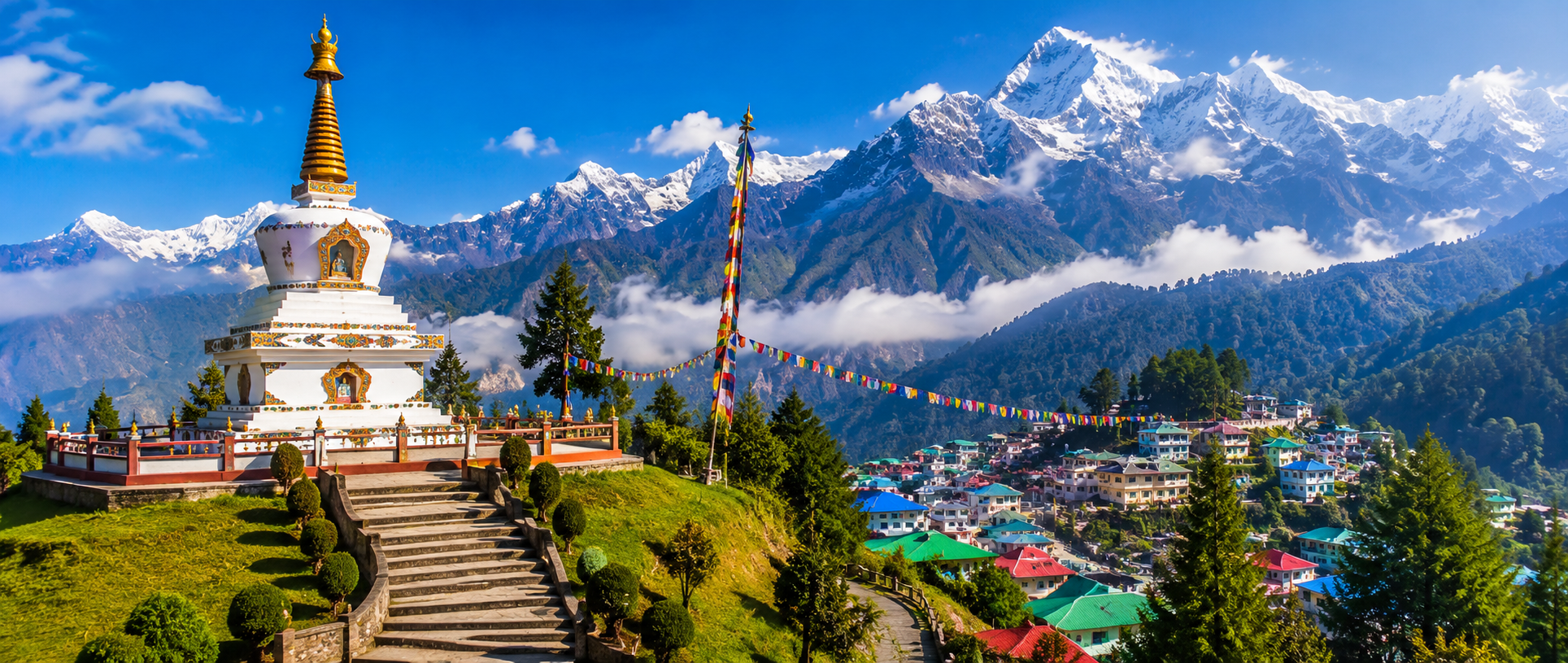
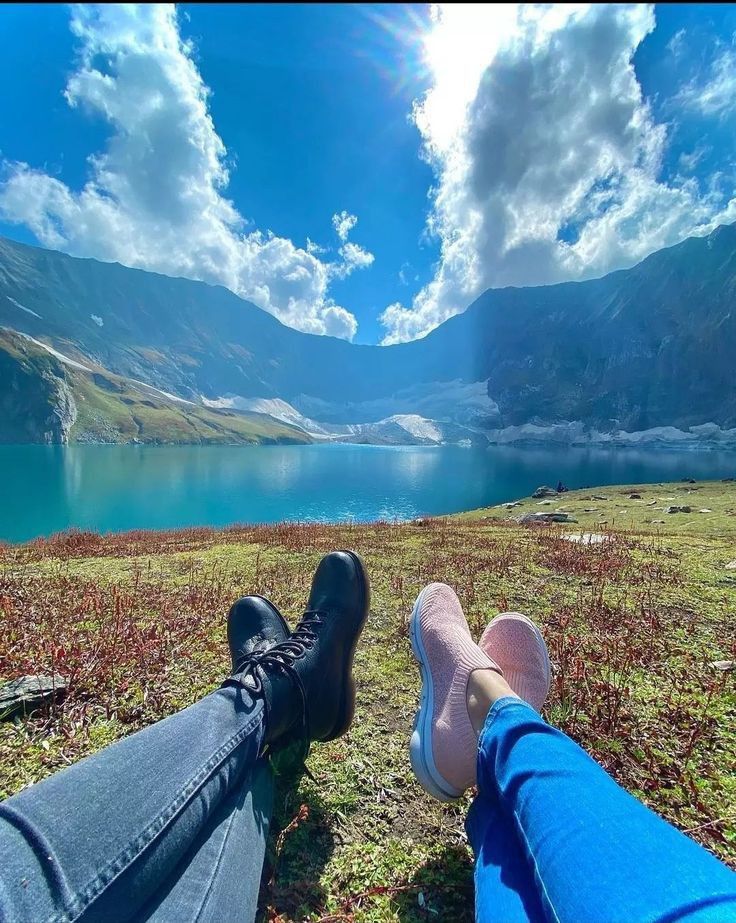
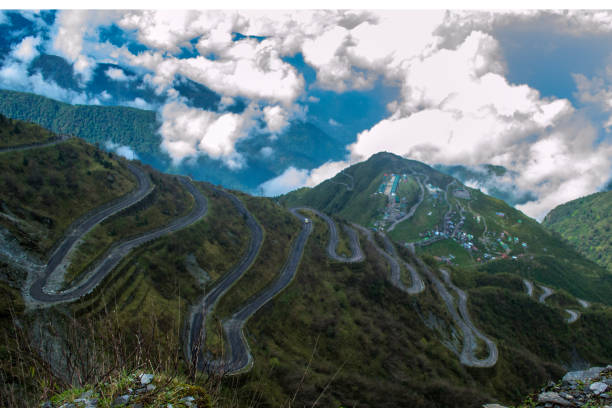
Sikkim is one of the most extraordinary Himalayan destinations in India, known for its snow-covered mountains, ancient Buddhist monasteries, high-altitude lakes, alpine valleys, and dramatic road journeys. Our Sikkim tour packages are designed to help travellers experience the complete diversity of the state from the busy mountain capital of Gangtok and the frozen lakes of North Sikkim to the peaceful monasteries of West Sikkim and the tea gardens of South Sikkim. Dominated by the mighty Kanchenjunga, the third-highest mountain in the world, Sikkim offers a travel experience that combines natural beauty, spirituality, adventure, and culture within a remarkably compact region.
Unlike many commercial hill stations in India, Sikkim has preserved much of its traditional Himalayan character. Prayer flags flutter across mountain passes, monasteries overlook forest valleys, and roads wind through waterfalls, cardamom plantations, rhododendron forests, and glacial rivers. The state is also one of India's cleanest and most environmentally protected destinations, with strong ecological policies and controlled tourism in many border regions. Whether you are planning a honeymoon, a family holiday, a photography trip, a trekking expedition, or an offbeat mountain road journey, Sikkim offers experiences that feel far more remote and authentic than most Himalayan circuits.
From the high-altitude beauty of Gurudongmar Lake and Yumthang Valley to the monastery towns of Pelling and Ravangla, every region of Sikkim offers a completely different landscape and atmosphere. Some travellers visit for the Silk Route road trip through East Sikkim, while others come for the Kanchenjunga Base Camp Trek, Buddhist monasteries, village homestays, or peaceful tea garden stays. At Vayable Trip, our itineraries focus on proper acclimatisation, realistic travel routes, carefully selected stays, and experiences that allow travellers to see Sikkim beyond rushed sightseeing schedules.
Explore Sikkim by Region
1. East Sikkim- East Sikkim is the gateway to the state and the most popular region for first-time travellers. Gangtok, Tsomgo Lake, Baba Mandir, Nathu La Pass, and the dramatic Zuluk Silk Route offer monasteries, mountain lakes, sunrise viewpoints, and some of the finest Himalayan road journeys in India.
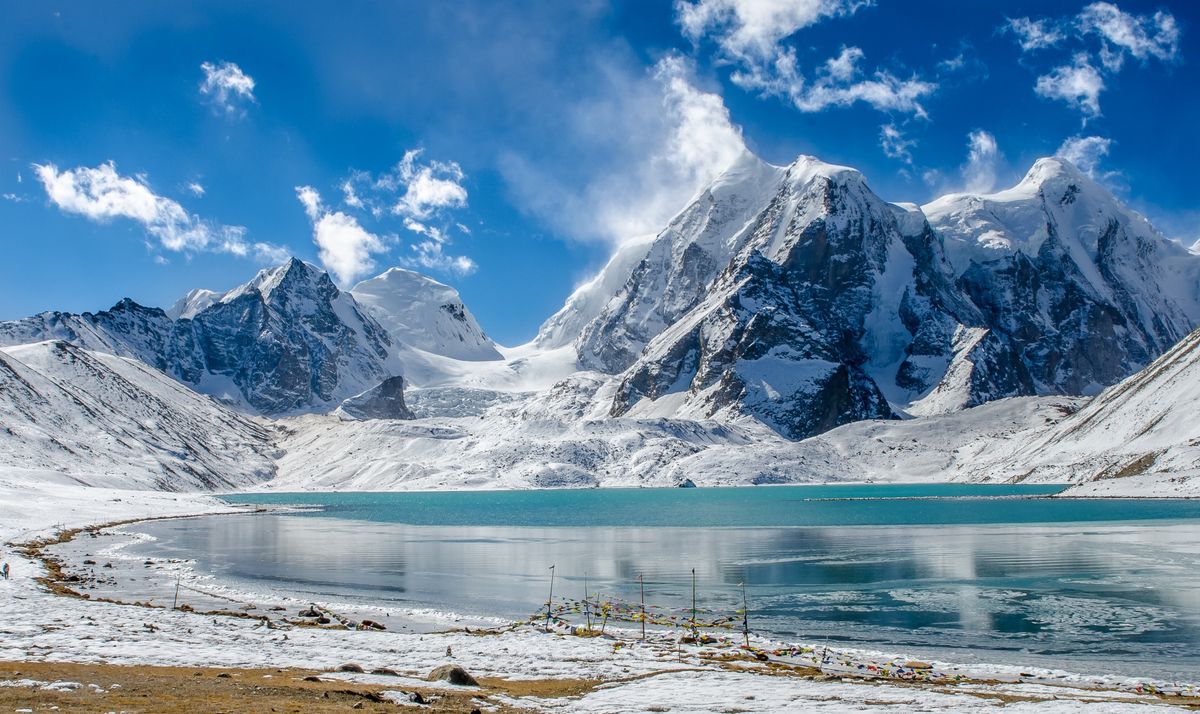
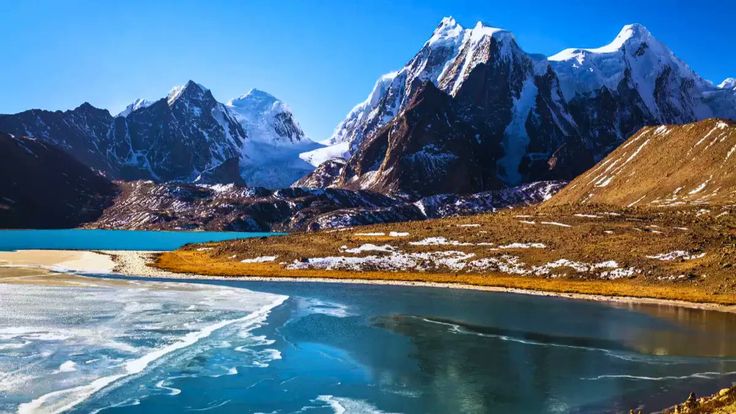
2. North Sikkim- North Sikkim is the most dramatic and remote region of the state, known for Gurudongmar Lake, Yumthang Valley, Zero Point, and the alpine valleys around Lachen and Lachung. The landscape changes from pine forest to snow-covered Himalayan terrain within a few hours of driving.
3. West Sikkim- West Sikkim is famous for its close views of Kanchenjunga, ancient monasteries, sacred lakes, and trekking routes. Destinations such as Pelling and Yuksom combine history, spirituality, forest landscapes, and access to the Kanchenjunga Base Camp trekking circuit.
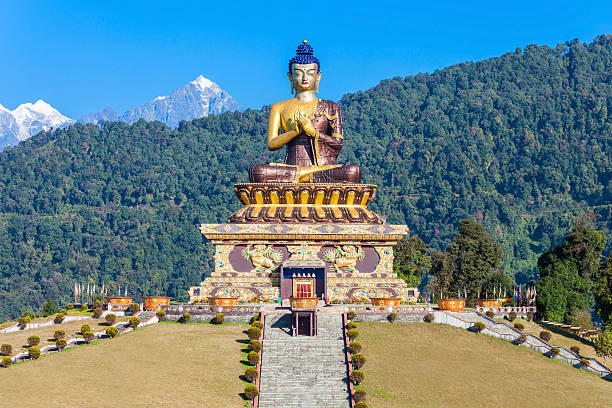
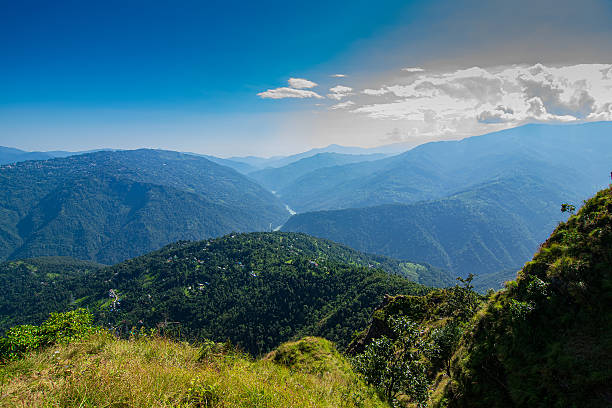
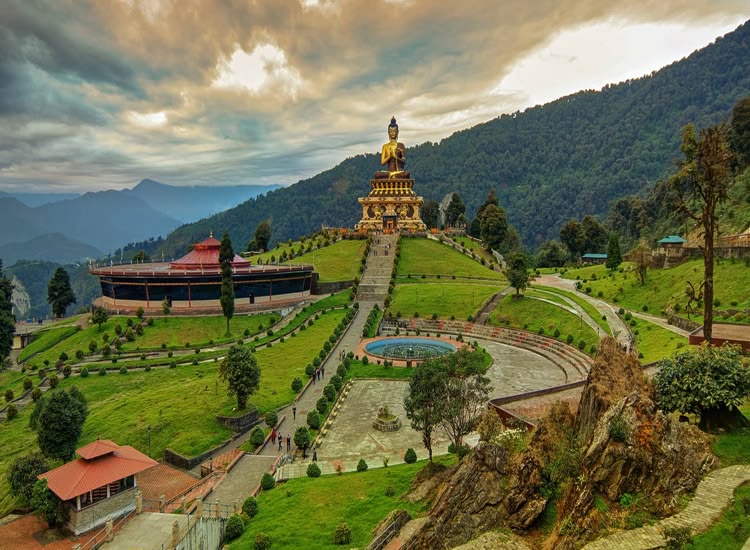
4. South Sikkim- South Sikkim offers a quieter and slower mountain experience with Buddha parks, monasteries, tea estates, forest villages, and panoramic Himalayan viewpoints. Namchi, Ravangla, Temi Tea Garden, and Maenam Wildlife Sanctuary are ideal for travellers seeking peaceful Himalayan landscapes away from heavy tourist crowds.
Popular Sikkim Holiday Packages
Sikkim Tour Package
- Duration: 4 Nights / 5 Days
- Starting From: ₹11,999
- Ideal For: First-Time Visitors
- Highlights: Gangtok, Tsomgo Lake, Baba Mandir & Local Sightseeing
Gangtok Tour Package
- Duration: 3 Nights / 4 Days
- Starting From: ₹9,999
- Ideal For: Couples, Families & Weekend Travelers
- Highlights: MG Marg, Tsomgo Lake, Nathula Pass & Ropeway Ride
Gangtok Lachung Tour Package
- Duration: 5 Nights / 6 Days
- Starting From: ₹15,999
- Ideal For: Nature Lovers & Families
- Highlights: Yumthang Valley, Lachung, Snow-Capped Mountains & Waterfalls
Gangtok Lachung Lachen Tour Package
- Duration: 6 Nights / 7 Days
- Starting From: ₹18,999
- Ideal For: Adventure Seekers
- Highlights: Gurudongmar Lake, Yumthang Valley, Zero Point & North Sikkim
Sikkim Honeymoon Package
- Duration: 5 Nights / 6 Days
- Starting From: ₹17,999
- Ideal For: Couples & Newlyweds
- Highlights: Romantic Mountain Views, Luxury Stays, Tsomgo Lake & North Sikkim Excursions
North Sikkim Tour Package
- Duration: 4 Nights / 5 Days
- Starting From: ₹14,999
- Ideal For: Adventure & Nature Lovers
- Highlights: Lachung, Lachen, Gurudongmar Lake, Yumthang Valley & Zero Point
East Sikkim Tour Package
- Duration: 3 Nights / 4 Days
- Starting From: ₹10,999
- Ideal For: Families & Leisure Travelers
- Highlights: Gangtok, Nathula Pass, Tsomgo Lake & Baba Harbhajan Singh Mandir
Sikkim Family Tour Package
- Duration: 6 Nights / 7 Days
- Starting From: ₹19,999
- Ideal For: Families & Group Travelers
- Highlights: Gangtok, Lachung, Yumthang Valley, Sightseeing & Comfortable Stays
Darjeeling Sikkim Tour Package
- Duration: 6 Nights / 7 Days
- Starting From: ₹18,999
- Ideal For: Couples & Families
- Highlights: Gangtok, Darjeeling, Tiger Hill Sunrise, Tsomgo Lake & Tea Gardens
Darjeeling Gangtok Lachung Tour Package
- Duration: 7 Nights / 8 Days
- Starting From: ₹22,999
- Ideal For: Complete Sikkim Explorers
- Highlights: Darjeeling, Gangtok, Lachung, Yumthang Valley & Himalayan Landscapes
Luxury Sikkim Tour Package
- Duration: 6 Nights / 7 Days
- Starting From: ₹29,999
- Ideal For: Luxury Travelers
- Highlights: Premium Resorts, Private Transfers, Exclusive Experiences & Scenic Mountain Retreats
Sikkim Adventure Tour Package
- Duration: 5 Nights / 6 Days
- Starting From: ₹16,999
- Ideal For: Adventure Enthusiasts
- Highlights: Nathula Pass, Gurudongmar Lake, Trekking Trails & High-Altitude Experiences
Sikkim Monsoon Holiday Package
- Duration: 4 Nights / 5 Days
- Starting From: ₹12,999
- Ideal For: Nature Lovers
- Highlights: Lush Green Valleys, Waterfalls, Scenic Drives & Peaceful Mountain Escapes
Complete Sikkim Holiday Package
- Duration: 8 Nights / 9 Days
- Starting From: ₹25,999
- Ideal For: Travelers Exploring Sikkim in Depth
- Highlights: Gangtok, Pelling, Lachung, Lachen, Gurudongmar Lake, Yumthang Valley & Nathula Pass
Why Choose Our Sikkim Holiday Tour Packages?
At Vayable Trip, we design Sikkim journeys around the realities of Himalayan travel rather than rushed sightseeing schedules. From high-altitude permits and acclimatisation planning to monastery experiences and remote mountain road journeys, our itineraries are created to help travellers experience Sikkim comfortably, safely, and in depth.
- Expertly designed itineraries by Northeast India and Himalayan travel specialists.
- Proper acclimatisation planning for North Sikkim and high-altitude regions.
- Complete permit assistance for Tsomgo Lake, North Sikkim, Silk Route, and restricted border areas.
- Experienced mountain drivers trained for Himalayan roads and weather conditions.
- Handpicked mountain resorts, boutique stays, homestays, and heritage-style accommodations.
- Flexible customisation options for couples, families, honeymoon travellers, trekkers, and private groups.
- Carefully balanced itineraries that avoid rushed travel and unnecessary long driving days.
- Guided monastery visits, local cultural experiences, and offbeat destination recommendations.
- Transparent pricing with no hidden costs.
- 24×7 on-trip support throughout your Sikkim journey.
Explore Our Best Sikkim Holiday Packages
Classic Sikkim Discovery (6–7 Days) Gangtok → Tsomgo Lake → Nathula → Pelling. Best for first-timers.
North Sikkim Adventure (7–8 Days) Gangtok → Lachung (Yumthang Valley) → Lachen (Gurudongmar Lake). Most popular package.
Romantic Sikkim Honeymoon Package (7 Days) Gangtok + Pelling with special decorations, candlelight dinners, and Kanchenjunga views.
Sikkim with Darjeeling (8–9 Days) Combine tea estates of Darjeeling with Himalayan beauty.
Cultural & Spiritual Sikkim (8 Days) Monasteries, Ravangla, Namchi & Yuksom.
Silk Route & Zuluk Tour Package (6–8 Days)- Gangtok • Zuluk • Nathang Valley • Gnathang Valley • Tsomgo Lake. A spectacular Himalayan road trip.
What’s Included in Every Sikkim Tour Package?
To make your Himalayan journey smooth, comfortable, and well-organised, our Sikkim packages include:
- Comfortable private transportation with experienced mountain drivers.
- Pickup and drop from Bagdogra Airport or New Jalpaiguri Railway Station.
- Accommodation in carefully selected hotels, mountain resorts, boutique stays, and homestays.
- Daily breakfast and selected meals depending on the itinerary.
- North Sikkim, Tsomgo Lake, and Silk Route permit assistance.
- Experienced local coordinators and 24×7 support.
- Trekking support, porter assistance, and guide arrangements for trekking packages.
- Sightseeing transfers according to itinerary.
- All applicable taxes and government service charges.
Top Tourist Attractions to Explore in Sikkim Tour Packages
1. Gangtok- Capital in the Clouds
Gangtok sits at 1,650 metres on a ridge in East Sikkim, with Kanchenjunga, the world's third-highest mountain at 8,586 metres filling the northwestern horizon on clear mornings with a presence so massive it seems impossible. As Sikkim's capital and its only significant urban centre, Gangtok is simultaneously the state's commercial hub and its cultural gateway: the Rumtek Monastery (one of the most important Kagyu monasteries in the world), the Namgyal Institute of Tibetology, the Enchey Monastery, and the Flower Exhibition Centre are all within the town's compact geography. The MG Marg pedestrian promenade lined with restaurants, shops, and mountain-facing viewpoints is the cleanest, most orderly town centre in Northeast India, and the Sikkim Government's long-standing environmental policies have kept the surrounding hillsides in a state of exceptional forest cover. Gangtok is the entry point for North Sikkim's high-altitude destinations, East Sikkim's Tsomgo Lake, and the state's dozens of Buddhist monasteries.
Best Time to Visit- March to May (rhododendron bloom, clear skies before pre-monsoon haze) • October to December (post-monsoon clarity, Kanchenjunga fully visible, best photography) • January to February (snow in higher areas, quiet and cold) • Monsoon (June–September) — roads can be affected by landslides but the valley is lush
Places to Visit- MG Marg • Tashi Viewpoint • Rumtek Monastery • Namgyal Institute of Tibetology • Enchey Monastery • Flower Exhibition Centre • Do-Drul Chorten Stupa • Ganesh Tok
What to Eat- Momos (Sikkimese steamed dumplings — the local version uses buckwheat flour and fillings of yak meat, pork, or vegetables) • Thukpa (noodle soup) • Tongba (millet beer drunk through a bamboo straw from a wooden vessel) • Gundruk soup (fermented leafy greens) • Phagshapa (dried pork with radish) • Sel Roti (rice flour ring bread) • Chhurpi (hard yak cheese)
2. North Sikkim- Gurudongmar, Lachen & Lachung
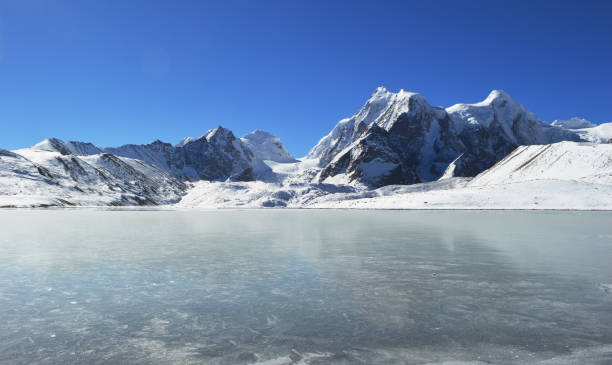
North Sikkim is the most remote and most dramatically beautiful of the state's four districts -a restricted area bordering Tibet and China where the Teesta River originates and where the landscape climbs from subtropical forest at 1,500 metres to tundra and glacial terrain above 5,000 metres within a single valley system. The two primary destinations are Lachen (2,750 m) and Lachung (2,700 m) small towns at the head of two parallel valleys from which the key high-altitude sites are reached. From Lachen: the Gurudongmar Lake at 5,430 metres one of the highest lakes in the world and sacred to both Buddhists and Sikhs, believed to have been blessed by Guru Nanak during his travels and the Chopta Valley, a high-altitude meadow of extraordinary beauty. From Lachung: the Yumthang Valley (Valley of Flowers at 3,564 m) and the Zero Point at 4,993 metres, where the road ends at a permanent snowfield even in summer. The entire North Sikkim district requires a Protected Area Permit, adding a layer of exclusivity that limits daily visitor numbers and preserves the landscape's integrity.
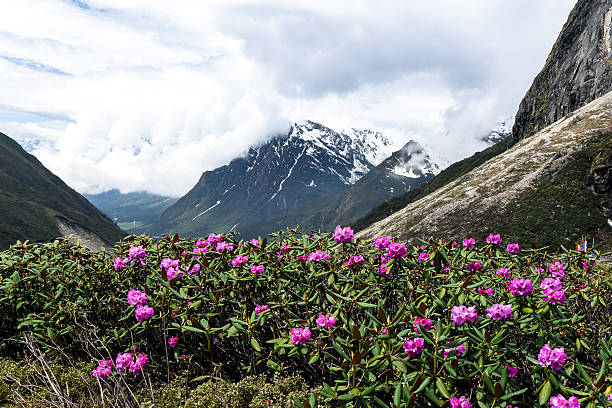
Best Time to Visit- May to June (Yumthang rhododendron bloom — extraordinary) • October to December (post-monsoon, Gurudongmar Lake unfrozen and accessible, crystal clear skies) • January to April (Gurudongmar partially or fully frozen — beautiful but access can be restricted) • Monsoon (July–September) — some roads close, North Sikkim partially inaccessible
Places to Visit- Gurudongmar Lake • Yumthang Valley • Zero Point • Chopta Valley • Thangu Valley • Lachen • Lachung • Chungthang • Katao (restricted military area, permits occasionally available)
What to Eat- Yak meat preparations (Lachen and Lachung, yak meat dried, stewed, and in momos) • Thukpa at the guesthouse kitchens • Butter tea (po cha essential at altitude, the fat content helps with the cold) • Tongba millet beer at local establishments • Gundruk and Sinki (fermented vegetable soups) • Sel Roti with local honey
3. Tsomgo Lake & Baba Mandir- East Sikkim's Sacred High
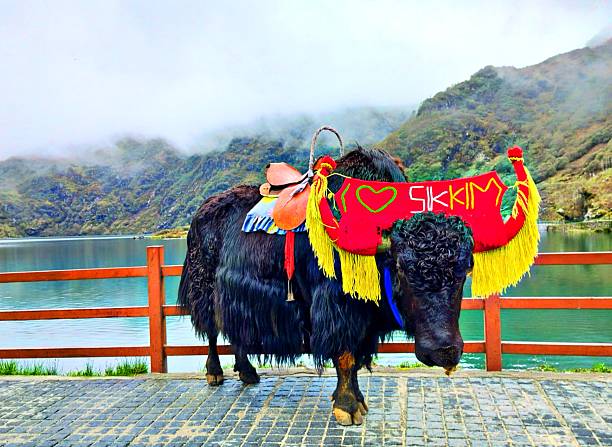
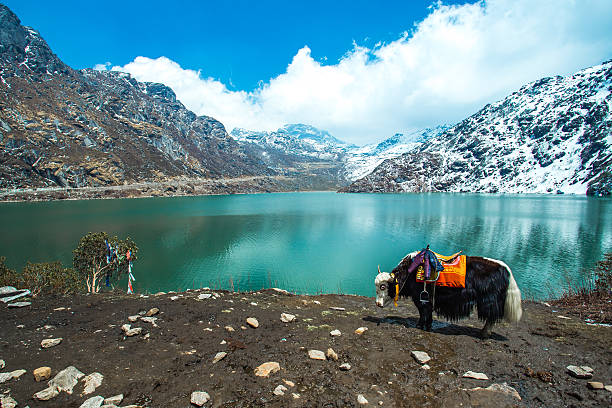
Tsomgo Lake also written Changu Lake sits at 3,753 metres, 40 kilometres east of Gangtok on the old trade route to Tibet, and is the most accessible high-altitude lake in Sikkim for day visitors from the capital. The oval glacial lake, 1 kilometre long, sits in a bowl of bare rock and short alpine grass that turns golden in autumn and white in winter the lake itself partially or fully freezes between December and March, creating a surface that reflects the surrounding peaks in a mirror of ice. Tsomgo is sacred to the local Sikkimese: the name means "source of the lake" in Bhutia, and the migratory Brahmin ducks that visit each winter are considered auspicious. The Baba Harbhajan Singh Mandir, 12 kilometres beyond Tsomgo at 4,310 metres, is a shrine to Harbhajan Singh an Indian Army soldier who died in 1968 and is believed to continue guarding the border; it is venerated by Indian Army soldiers and civilians alike and sits at one of the most dramatic viewpoints in East Sikkim.
Best Time to Visit- October to February (lake partially frozen, snow on the peaks, extraordinary winter scenery) • March to May (thaw, Brahmin ducks present) • June to September (monsoon the route is often closed by landslides) • Best avoided on weekends and Indian public holidays when crowds are very large
Places to Visit- Tsomgo Lake • Baba Harbhajan Singh Mandir • Nathu La Pass (Indian nationals only) • Kupup Valley • Gnathang Valley • Lungthung
What to Eat- Hot noodle soup (Maggi or thukpa) at the Tsomgo lakeside stalls eating at 3,753 m in the mountain air • Butter tea at Baba Mandir (served free to all visitors by the army canteen) • Momos from the roadside stalls • Carry packed lunch from Gangtok for the best experience
4. Pelling- Kanchenjunga Up Close
Pelling sits at 2,150 metres in West Sikkim, and its defining feature is a view of Kanchenjunga that is closer, more unobstructed, and more overwhelming than anywhere else in the state. From the upper reaches of Pelling, the mountain's three summits and the long ridgeline that connects them fill the entire northern horizon from first light to sunset in a way that stops conversation. West Sikkim is the district that contains some of Sikkim's oldest and most historically significant monasteries: Pemayangtse Monastery (one of the oldest in Sikkim, founded 1705), Sangachoeling Monastery (the second-oldest, only accessible by a 30-minute forest trek), and Tashiding Monastery (the holiest monastery in Sikkim, according to Guru Padmasambhava's designation). The Khecheopalri Lake considered the wish-fulfilling lake, sacred to both Buddhists and Hindus, and unique for the fact that no leaf is ever allowed to rest on its surface (birds remove them) is 26 kilometres from Pelling and one of Sikkim's most spiritually atmospheric sites.
Best Time to Visit- October to December (clearest Kanchenjunga views, post-monsoon, ideal weather) • March to May (rhododendron bloom on the monastery trails, good visibility) • Monsoon (June–September) Kanchenjunga hidden in clouds but the forests are extraordinary
Places to Visit- Pemayangtse Monastery • Rabdentse Ruins • Khecheopalri Lake • Sangachoeling Monastery • Tashiding Monastery • Skywalk Glass Bridge • Norbugang Coronation Park • Rimbi Waterfall
What to Eat- Sikkimese Thali at local homestays (the best food in Pelling is in the family-run guesthouses) • Gundruk soup • Chhurpi (hard yak/cow cheese, chewed as a snack) • Sel Roti with tea • Kinema curry (fermented soybean preparation, a Sikkim staple) • Pork preparations at local restaurants • Tongba millet beer
5. Yuksom- Gateway to Kanchenjunga Base Camp
Yuksom holds a unique place in Sikkim's history: it was the first capital of the Chogyal kingdom and the site where the first king of Sikkim, Phuntsog Namgyal was crowned in 1642 by three lamas who had converged there from Tibet, Bhutan, and Sikkim. The Norbugang Coronation Throne, a moss-covered stone seat in the forest, marks the exact coronation spot and is one of the most evocative historical monuments in the eastern Himalayas. At 1,780 metres in West Sikkim, 35 kilometres from Pelling, Yuksom is also the departure point for the Kanchenjunga Base Camp Trek one of the Himalayas' finest high-altitude routes, passing through rhododendron forests, yak pastures, and glacial terrain to Dzongri (4,020 m) and Goecha La (4,940 m) with the full Kanchenjunga massif visible from the ridge. The Khangchendzonga National Park, which the trek passes through entirely, is a UNESCO World Heritage Site.
Best Time to Visit- April to May (rhododendron bloom on the trek route, clear pre-monsoon) • October to November (post-monsoon clarity, best mountain views, stable weather on the ridge) Monsoon (June–September), Kanchenjunga Base Camp trek suspended, park partially closed
Places to Visit- Norbugang Coronation Throne • Dubdi Monastery • Kathok Lake • Khangchendzonga National Park • Dzongri • Goecha La • Samiti Lake • Tsokha
What to Eat- Trekker's trail food- Yuksom's lodges serve excellent dal bhat and thukpa • Sikkimese Thali at the family guesthouses • Butter tea at the monastery • Chhurpi and dried yak meat (trail snacks) • Sel Roti • Fresh bamboo shoot preparations
6. Namchi- South Sikkim's Spiritual Skyline
Namchi is the headquarters of South Sikkim district, sitting at 1,675 metres on a ridge that gives 360-degree views of the surrounding Himalayan ranges on clear days. It is home to two of Sikkim's most visually dramatic modern religious monuments: the Samdruptse an 87-foot statue of Guru Padmasambhava (Guru Rinpoche) on a forested hilltop that is the tallest statue of the Guru in the world, and the Siddhesvara Dham a complex that replicates all 12 Jyotirlinga shrines of Shiva in a single location on Solophok Hill, making it a pilgrimage destination for Hindus who cannot travel to all 12 individual sites across India. The combination of Buddhist and Hindu sacred sites in a single hilltop town reflects Sikkim's remarkable tradition of multi-faith coexistence. The surrounding South Sikkim countryside cardamom plantations, terraced rice fields, small monasteries, and rhododendron forest makes it one of the state's most visually varied districts for slow travel.
Best Time to Visit- October to December (clear views, post-monsoon) • March to May (wildflowers on the hillside, spring atmosphere) • Loosong festival (December–January, Sikkimese New Year) colourful Cham dance performances at the monasteries
Places to Visit- Samdruptse • Siddhesvara Dham • Temi Tea Garden • Tendong Hill • Borong Hot Springs • Ravangla Buddha Park • Maenam Wildlife Sanctuary • Ralong Monastery
What to Eat- Temi Tea (single-estate organic Himalayan tea, one of India's finest — buy directly from the estate) • Sikkimese Thali with Kinema curry • Sel Roti • Momos with Sikkimese chilli sauce • Phagshapa pork • Churpi with chilli • Bamboo shoot preparations
7. Ravangla-Tea, Buddha, and the Maenam Ridge
Ravangla sits at 2,100 metres on the ridge between the Rangit and Teesta valleys in South Sikkim, with views that take in both the Kanchenjunga massif to the north and the forested ridges descending to the plains to the south. It is the kind of place that rewards the traveller who lingers: the Buddha Park's 130-foot Shakyamuni Buddha sits against a backdrop of rhododendron-covered Maenam Hill; the Ralong Monastery behind the town is one of West Sikkim's finest; and the Maenam Wildlife Sanctuary above the town — a 3-hour uphill trek to the Maenam summit at 3,235 metres has some of the finest Red Panda habitat in Sikkim. Ravangla is quieter than Gangtok and Pelling, less touristically developed, and closer to the rhythm of Sikkimese village life. The nearby Borong and Damthang areas have homestays that offer the most authentic rural Sikkim accommodation available.
Best Time to Visit- October to December (clearest mountain views, Red Panda most active) • March to May (rhododendron on Maenam, spring bird activity) • Monsoon (June–September) Maenam trek trail is very slippery, Red Panda visible but trek difficult
Places to Visit- Buddha Park • Maenam Wildlife Sanctuary • Ralong Monastery • Doling Gompa • Temi Tea Garden • Borong • Damthang • Kewzing village
What to Eat- Sikkimese Homestay Thali, Ravangla's homestays serve the most authentic home-cooked Sikkimese food in the state • Kinema curry (fermented soybean) • Gundruk soup • Bamboo shoot sabzi • Pork with radish • Tongba millet beer • Temi Tea
8. Zuluk & Silk Route- East Sikkim's Hidden Highway
The Zuluk Silk Route is one of the most dramatic road journeys in India, a series of 32 hairpin bends visible from a single viewpoint at Thambi, ascending from 2,500 to 3,430 metres through East Sikkim's rhododendron forests on the ancient trade route that once connected India and Tibet through the Jelep La pass. Zuluk village itself, at 2,900 metres, is a small settlement of a few dozen houses with views across the Kanchenjunga range and the Singalila Ridge that are extraordinary in scope. The circuit continues to Gnathang Valley (3,640 m) a high-altitude grassland with army settlements and yak herds and Nathang Valley, before connecting to Tsomgo Lake on the return to Gangtok. The entire route requires a Protected Area Permit and is accessible only through registered agents with specified vehicles; this restriction limits daily visitor numbers and has preserved the route's wild character.
Best Time to Visit- October to December (post-monsoon clarity, best views, Kanchenjunga fully visible) • March to May (rhododendron bloom along the route) • Road is typically closed January to February due to heavy snowfall • Monsoon (June–September) — route often blocked by landslides
Places to Visit- Zuluk Village • Thambi Viewpoint • Gnathang Valley • Nathang Valley • Lungthung • Aritar Lake • Old Silk Route • Jelep La (border, restricted) • Kupup
What to Eat- Simple guesthouse food at Zuluk- dal bhat, thukpa, and momos from the family kitchens • Butter tea and Tongba at altitude • Army canteen tea at Gnathang (open to civilian visitors) • Carry packed food from Gangtok for Nathang and Thambi viewpoint
9. Kalimpong- Art Town on the Teesta
Kalimpong sits at 1,250 metres on a ridge above the Teesta River in the Darjeeling Hills technically part of West Bengal but geographically, culturally, and historically inseparable from the Sikkim circuit. It was a major trading post on the old Tibet-India route before 1959, and that heritage is visible in the extraordinary diversity of its population: Nepali, Lepcha, Bhutia, Tibetan, Sikkimese, Bengali, and a small community descended from Scottish missionaries who built schools that are still among West Bengal's finest. Kalimpong is known for its nurseries the town produces a significant proportion of India's commercial orchid and gladioli exports and for the Thongsa Gompa and Zang Dhok Palri Phodang monasteries that preserve rare Tibetan Buddhist texts brought out of Tibet after 1959. The town's colonial-era market, the Cactus Nursery, and the riverside drive along the Teesta make it a destination of quiet, textured pleasure that contrasts sharply with Sikkim's high-altitude drama.
Best Time to Visit- October to April (dry, clear views of Kanchenjunga from Deolo Hill) • Spring (March to April) — the nurseries are in full bloom • Monsoon (June–September) — the Teesta swells dramatically and the hills are lush but roads can be affected
Places to Visit- Deolo Hill • Zang Dhok Palri Phodang • Thongsa Gompa • Kalimpong Nurseries • Morgan House • Durpin Monastery • Lava • Neora Valley National Park • Teesta River
What to Eat- Kalimpong Cheese (the town produces a cow's milk cheese using a Swiss recipe introduced by missionaries sold at the market) • Shapale (fried meat-filled bread) • Sael (rice ring bread) • Beef preparations at local restaurants • Chow Mein Kalimpong-style (different from Chinese or Indian versions) • Tongba • Aachar (local pickles)
10. Kanchenjunga Base Camp Trek- The Ultimate Sikkim Circuit
The Kanchenjunga Base Camp Trek is one of the great Himalayan trekking routes, a 10 to 14-day journey from Yuksom through the Khangchendzonga National Park (UNESCO World Heritage Site) to Goecha La at 4,940 metres, from where the full south face of Kanchenjunga (8,586 m) fills the view from summit to glacier in a wall of ice and rock that rivals anything in the Himalayas. The route passes through some of the most dramatic ecological transitions in the eastern Himalayas: subtropical forest at Yuksom gives way to temperate oak and rhododendron forest at Tsokha, then to alpine meadow and yak pasture at Dzongri, and finally to glacial moraines and snowfields at Zemathang and Samiti Lake. The Dzongri Plateau at 4,020 metres, four days from Yuksom is itself a destination of extraordinary beauty, with a 360-degree panorama of Kanchenjunga, Pandim, Rathong, and Kabru peaks that most trekkers consider the finest mountain viewpoint in the eastern Himalayas.
Best Time to Visit- April to May (rhododendron forest in bloom on the lower route, pre-monsoon stable weather) • October to November (post-monsoon, clearest skies, best views at Goecha La, cold but stable) • Monsoon (June–September)- route closed due to landslides and park regulations • Route closed November to March (heavy snow at altitude)
Places to Visit- Yuksom • Sachen • Tsokha • Dzongri Plateau • Thangsing • Samiti Lake • Goecha La • Zemathang • Bakkhim Meadow
What to Eat- Trekking lodge dal bhat (the standard trail meal- rice, lentils, potato sabzi and pickle, served twice daily at the lodges) • Sherpa stew (thick vegetable and noodle soup) • Garlic soup (essential at altitude for acclimatisation) • Butter tea • Tsampa (roasted barley flour) porridge at high camps • Carry chocolate and energy bars for the Goecha La summit day
Adventure Activities in Sikkim Tour Packages
Sikkim is one of India’s most exciting Himalayan adventure destinations, where snow-capped mountains, alpine lakes, dense forests, and high-altitude valleys create the perfect setting for thrilling outdoor experiences. From challenging treks and river adventures to snow activities and scenic mountain exploration, Sikkim offers unforgettable adventures for every kind of traveller.
• Trekking to Goechala Trek- one of India’s most scenic Himalayan treks with breathtaking views of Kanchenjunga and surrounding peaks.
• River rafting in the Teesta River- thrilling white-water rafting experiences through fast-flowing Himalayan rivers and deep valleys.
• Paragliding in Gangtok- fly above mountain valleys, monasteries, forests, and scenic landscapes of East Sikkim.
• Camping in Yumthang Valley- overnight stays amidst alpine meadows, rivers, and snow-covered Himalayan surroundings.
• Snow adventures near Tsomgo Lake- snow walks, snow play, and winter experiences in high-altitude mountain regions.
• Mountain biking through Himalayan roads- cycling adventures across winding mountain roads, villages, and scenic valleys.
• Exploring Gurudongmar Lake- high-altitude expeditions to one of the world’s highest lakes surrounded by dramatic mountain landscapes.
• Yak rides in North Sikkim- traditional mountain experiences near alpine lakes and snow-covered regions.
• Nature walks and forest trails in Yumthang Valley– peaceful hiking experiences through rhododendron forests and Himalayan meadows.
• Ropeway rides in Gangtok- panoramic aerial views of the city, valleys, and snow-clad mountain ranges.
• Birdwatching and wildlife exploration- spotting rare Himalayan birds and wildlife in Sikkim’s protected forests and sanctuaries.
• Sunrise excursions to mountain viewpoints- witnessing breathtaking Himalayan sunrise views over the Kanchenjunga range.