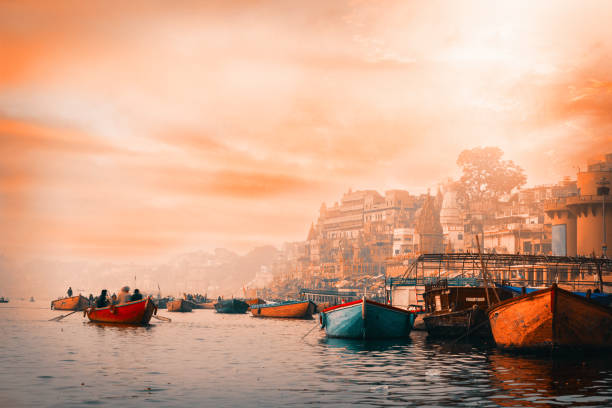
Uttar Pradesh is the cultural and spiritual heart of northern India, a state where ancient cities, sacred rivers, Mughal monuments, Buddhist pilgrimage sites, wildlife reserves, and royal Nawabi heritage exist within a single travel circuit. From the white marble perfection of the Taj Mahal in Agra to the timeless ghats of Varanasi, the state offers an extraordinary depth of history, faith, architecture, and living tradition that few destinations in the world can match. Our carefully designed Uttar Pradesh tour packages help travellers experience the state beyond rushed sightseeing, with immersive itineraries that combine heritage, spirituality, food, festivals, and authentic local experiences.
The state is home to some of India’s most important spiritual destinations. Ayodhya, the birthplace of Lord Ram; Mathura and Vrindavan, associated with the life of Krishna; Prayagraj, where the Ganges and Yamuna meet at the sacred Sangam; and Varanasi, one of the oldest continuously inhabited cities in the world, attract millions of pilgrims and travellers every year. Uttar Pradesh is also central to the Buddhist Circuit, with Sarnath where the Buddha gave his first sermon and Kushinagar, where he attained Parinirvana, drawing visitors from across Asia and beyond.
Beyond pilgrimage and heritage, Uttar Pradesh offers remarkable diversity for every kind of traveller. Explore the Nawabi culture and Awadhi cuisine of Lucknow, witness the extraordinary festivals of Braj Holi and Dev Deepawali, experience tiger safaris and rhino sightings in Dudhwa National Park, or discover offbeat spiritual towns like Chitrakoot along the Ramayana circuit. Whether you are planning a family holiday, a pilgrimage journey, a Buddhist tour, a heritage trip, or a luxury cultural escape, Uttar Pradesh delivers one of the richest and most layered travel experiences in India.
Popular Uttar Pradesh Tour Packages by Vayable Trip
1. Classic Golden Triangle with Agra (6 Days / 5 Nights)
Route: Delhi → Agra → Jaipur → Delhi (Focus on Agra in UP)
Highlights: Taj Mahal at sunrise/sunset, Agra Fort, Fatehpur Sikri, shopping in Jaipur & Delhi.
Best For: First-time visitors, couples, heritage lovers.
2. Braj Holi Special – Holi in Mathura & Vrindavan (6–8 Days)
Highlights: Lathmar Holi in Barsana & Nandgaon, Phoolon Wali Holi in Vrindavan, Temple Holi at Krishna Janmabhoomi & Banke Bihari.
Best Time: February–March 2026 (Main celebrations late Feb to early March).
3. Spiritual Uttar Pradesh Circuit (8 Days / 7 Nights)
Route: Delhi → Mathura-Vrindavan → Agra → Lucknow → Ayodhya → Prayagraj → Varanasi
Highlights: Krishna temples, Ram Mandir, Kashi Vishwanath, Ganga Aarti, Sangam Snan.
Best For: Pilgrims, spiritual seekers.
4. Heritage & Nawabi Lucknow + Varanasi (7 Days / 6 Nights)
Route: Lucknow → Ayodhya → Prayagraj → Varanasi
Highlights: Imambaras, gardens, Ram Mandir darshan, boat ride on Ganga.
Best For: Culture & food enthusiasts.
5. Complete Uttar Pradesh Explorer (12–15 Days)
Covers Agra, Mathura, Vrindavan, Lucknow, Ayodhya, Prayagraj, Varanasi & more. Ideal for in-depth exploration with flexible pacing.
Popular Uttar Pradesh Tour Circuits
Uttar Pradesh is best explored through multi-destination circuits that combine spirituality, heritage, culture, food, and history. We offer fully customisable tour routes based on travel style and trip duration.
1. Agra - Mathura- Vrindavan Circuit- Ideal for heritage and spiritual travellers combining the Taj Mahal with Krishna pilgrimage sites.
2. Varanasi - Prayagraj- Ayodhya Circuit- A deeply spiritual journey through the sacred cities of the Ganges and Ramayana traditions.
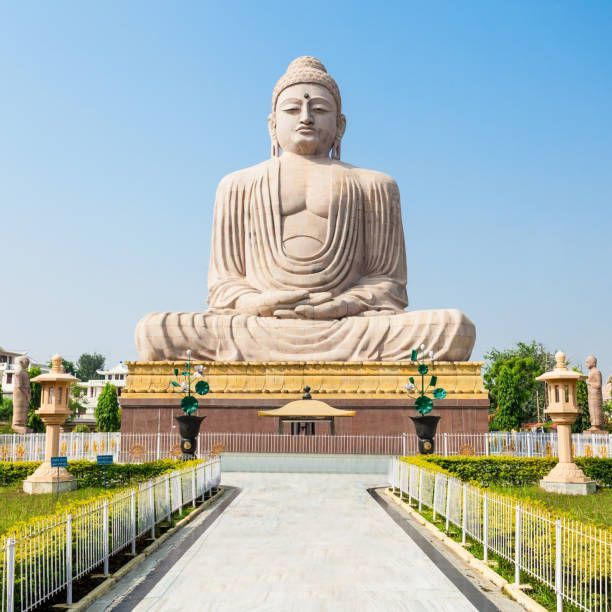
3. Buddhist Circuit Tour- Sarnath – Kushinagar – Bodh Gaya – Lumbini. Perfect for Buddhist pilgrims and cultural travellers exploring the life of the Buddha.
4. Spiritual Uttar Pradesh Tour- Ayodhya – Varanasi – Prayagraj – Chitrakoot – Mathura. One of India’s richest pilgrimage circuits.
5. Mughal Heritage Circuit- Agra – Fatehpur Sikri – Lucknow. Focused on Mughal architecture, Nawabi culture, and Indo-Islamic heritage.
6. Wildlife & Heritage Tour- Dudhwa National Park – Lucknow – Agra. A unique combination of tiger safaris, Awadhi culture, and Mughal monuments.
Golden Triangle with Spiritual Uttar Pradesh
Experience the perfect blend of India’s architectural wonders and profound spiritual essence with our Golden Triangle + Spiritual Uttar Pradesh tour. This thoughtfully curated itinerary combines the iconic heritage of the Golden Triangle with the sacred heartlands of Uttar Pradesh.
- Golden Triangle: Delhi, Agra (Taj Mahal & Agra Fort), Jaipur (Amber Fort & Pink City)
- Spiritual Circuit: Mathura-Vrindavan (Land of Lord Krishna), Ayodhya (Ram Mandir), Prayagraj (Triveni Sangam), Varanasi (Ghats & Ganga Aarti)
Key Attractions covered- Sunrise at the Taj Mahal, Sacred darshan at Krishna Janmabhoomi & Banke Bihari Temple, Divine evening Ganga Aarti in Varanasi, Ram Mandir in Ayodhya, Majestic forts and palaces of Rajasthan, Holy dip at Triveni Sangam.
Route: Delhi → Agra → Mathura-Vrindavan → Ayodhya → Prayagraj → Varanasi → Delhi
Best for Heritage lovers, spiritual seekers, families, and first-time visitors to India. This package offers a beautiful balance of sightseeing, cultural exploration, and spiritual peace with comfortable pacing and premium services.
What’s Included in Every Uttar Pradesh Holiday Tour Package?
- Comfortable private transportation & transfers
- Accommodation in carefully selected hotels.
- Breakfast & Dinner (as per package plan).
- Sightseeing tours as per itinerary.
- Experienced local drivers & guides.
- Temple darshan assistance in selected destinations.
- Toll taxes, parking fees & driver allowances.
- 24×7 customer support throughout the trip.
- Custom itinerary planning & travel assistance.
Top Tourist Attractions to Explore in Uttar Pradesh Holiday Packages
1. Agra- The Taj and the Mughal Empire's Greatest Mile
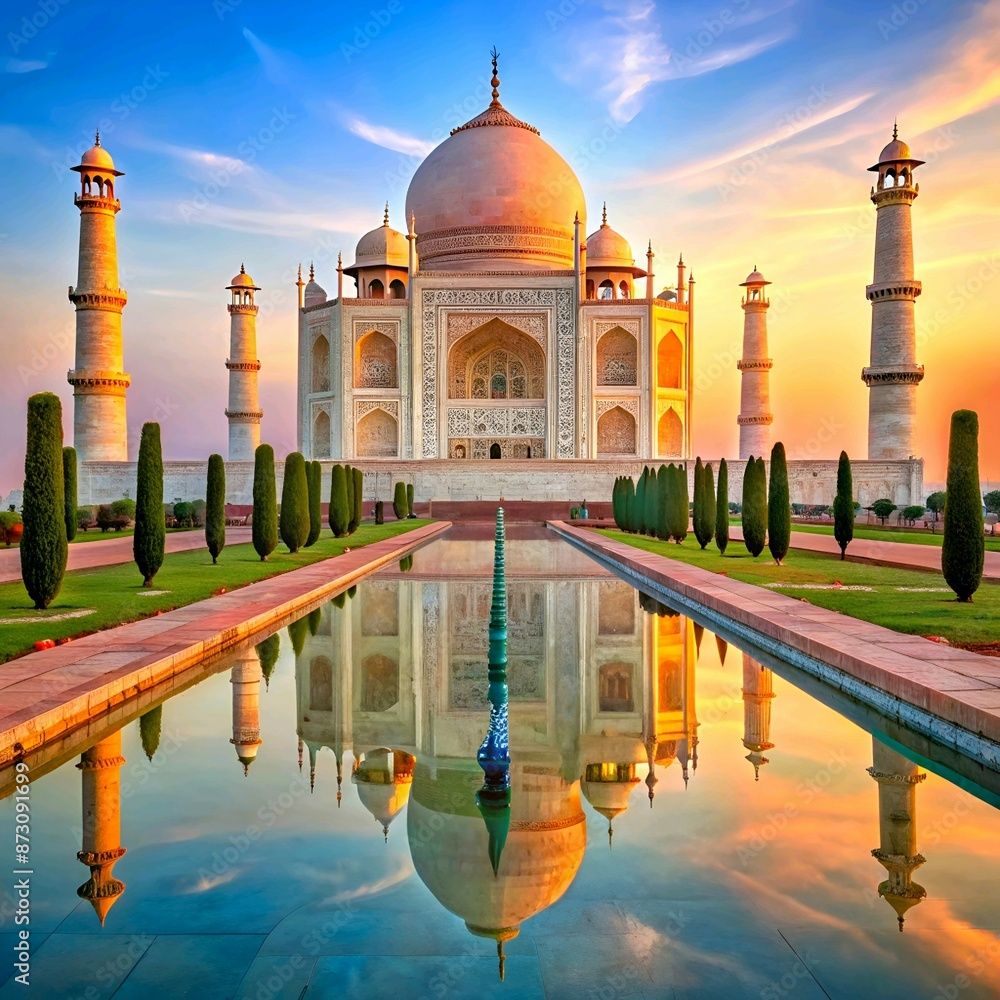
Agra contains three UNESCO World Heritage Sites within a 10-kilometre radius, the Taj Mahal, Agra Fort, and Fatehpur Sikri a concentration of Mughal architectural genius unmatched anywhere in the world. The Taj Mahal needs no introduction, but even the most photographed building on earth rewards careful attention: the way the white marble changes colour from rose-pink at dawn to brilliant white at noon to soft gold at sunset; the precision of the calligraphy around the entrance arch; the reflecting pool that doubles the mausoleum's height on still mornings. Agra Fort, 2.5 kilometres to the northwest, is where Shah Jahan spent the final 8 years of his life imprisoned by his son Aurangzeb, with a window view of the Taj across the Yamuna, one of the most poignant stories in Mughal history, built into its greatest monument. Fatehpur Sikri, 40 kilometres west, is Akbar's abandoned capital, an entire city in red sandstone that was built, occupied for 14 years, and then deserted, preserved almost perfectly by its abandonment.
Best Time to Visit- October to March (cool and clear, best photography conditions) • November (Taj Mahotsav festival, 10-day cultural event) • Dawn visit any month (the sunrise light on the Taj is the finest view regardless of season) • avoid April to June (extreme heat, 45°C+)
Places to Visit- Taj Mahal • Agra Fort • Fatehpur Sikri • Mehtab Bagh • Itimad-ud-Daulah (Baby Taj) • Chini Ka Rauza • Mariam's Tomb • Kinari Bazaar.
What to Eat- Petha (Agra's most famous sweet crystallised ash gourd in multiple flavours, sold at Panchhi Petha on Taj Road) • Dalmoth (spiced lentil snack, an Agra speciality) • Bedai with Aloo Sabzi (Agra breakfast) • Mughlai Biryani • Sheermal • Jalebi and Rabri at the old city's sweet shops
2. Varanasi- The World's Oldest Living City
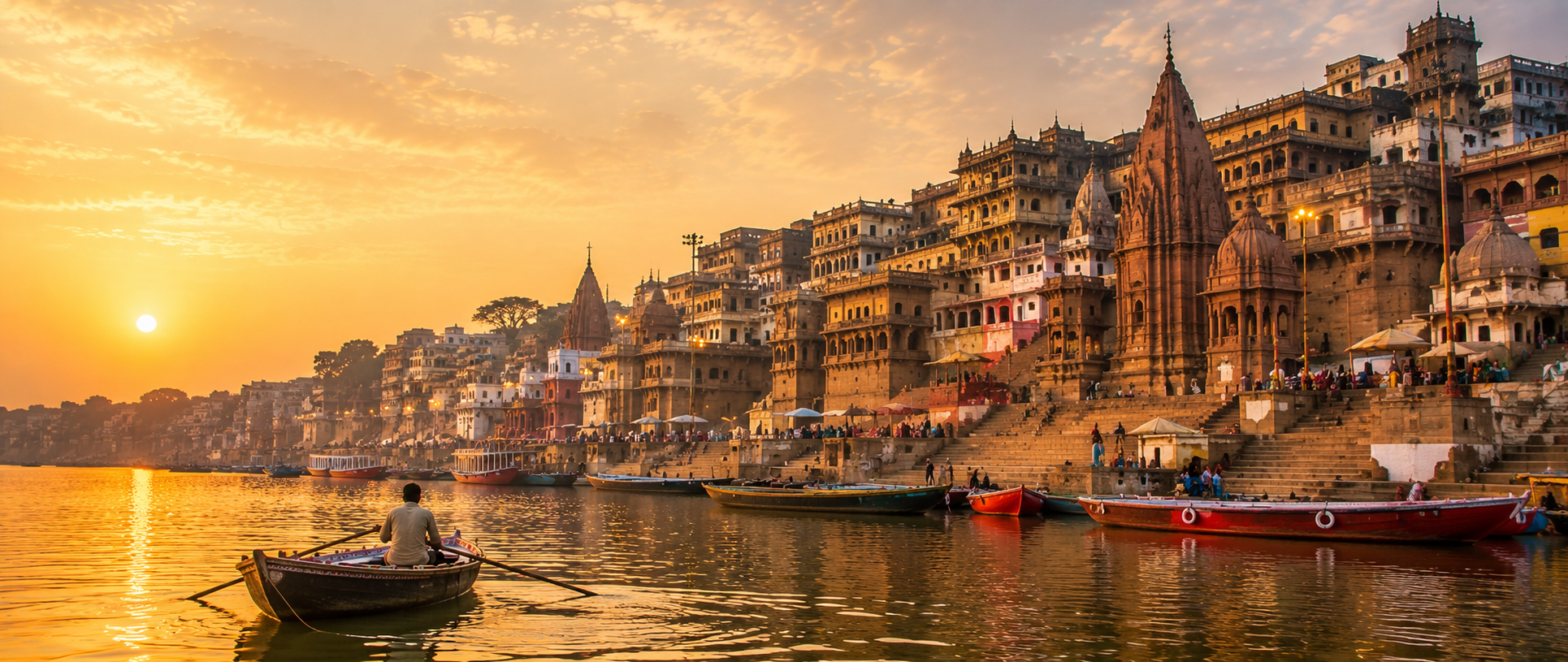
Varanasi is the city that makes every other Indian city seem young. Continuously inhabited for at least 3,000 years and possibly 5,000, it is one of the oldest living cities on earth a fact that is not abstract here but physically present in the accumulated layers of temples, ghats, narrow lanes, and ritual that line 7 kilometres of the Ganges' west bank. For Hindus, dying in Varanasi and being cremated at the Manikarnika or Harishchandra ghats is the most auspicious end available, the city is believed to grant moksha (liberation from the cycle of rebirth) to those who die within it. The Ganga Aarti at Dashashwamedh Ghat performed every evening at sunset by seven priests wielding fire lamps in choreographed sequence is the most mesmerising ritual ceremony in India. And the old city's lanes, where temples, silk-weaving workshops, chai stalls, and Banarasi music spill together, are unlike anything else in the subcontinent.
Best Time to Visit- October to March (best weather for the ghats and city walks) • November (Dev Deepawali, Kartik Purnima, when all 84 ghats are lit with lakhs of lamps, the most spectacular single evening in the Indian pilgrimage calendar) • Maha Shivaratri (February/March) extraordinary religious atmosphere
Places to Visit- Dashashwamedh Ghat • Manikarnika Ghat • Assi Ghat • Kashi Vishwanath Temple • Sarnath • Ramnagar Fort • Banaras Hindu University • Tulsi Manas Temple • Bharat Mata Mandir
What to Eat- Kachori Sabzi • Banarasi Paan • Thandai • Malaiyyo • Baati Chokha • Lassi at Ksheer Sagar or Blue Lassi.
3. Lucknow- City of Nawabs and Tehzeeb
Lucknow is the city that perfected the art of living well. As the capital of the Nawabs of Awadh in the 18th and 19th centuries, it developed a courtly culture tehzeeb of extraordinary refinement: a distinctive dialect of Urdu, a school of classical music (thumri), a style of dance (Kathak), a cuisine (Awadhi) that influenced every great Indian restaurant menu, and an architecture of pierced screens, curved arches, and layered plasterwork that can be seen in the Bara Imambara, the Chota Imambara, the Residency ruins, and the Rumi Darwaza. The Bara Imambara's bhul-bhulaiya, a labyrinthine upper gallery with 489 identical doorways and passages is the finest architectural puzzle in India. Lucknow today is a modern, rapidly growing city, but the old Chowk area and the Hazratganj boulevard preserve the Nawabi character with remarkable fidelity.
Best Time to Visit- October to March • November (Lucknow Mahotsav) • avoid April to June
Places to Visit- Bara Imambara • Chota Imambara • Rumi Darwaza • The Residency • Hazratganj • Chowk • Dilkusha Kothi • La Martiniere College • Ambedkar Memorial Park.
What to Eat- Galouti Kebab • Nihari • Sheermal • Kulfi Faluda • Makkhan Malai • Biryani • Roomali Roti.
4. Mathura & Vrindavan- Krishna's Sacred Birthplace
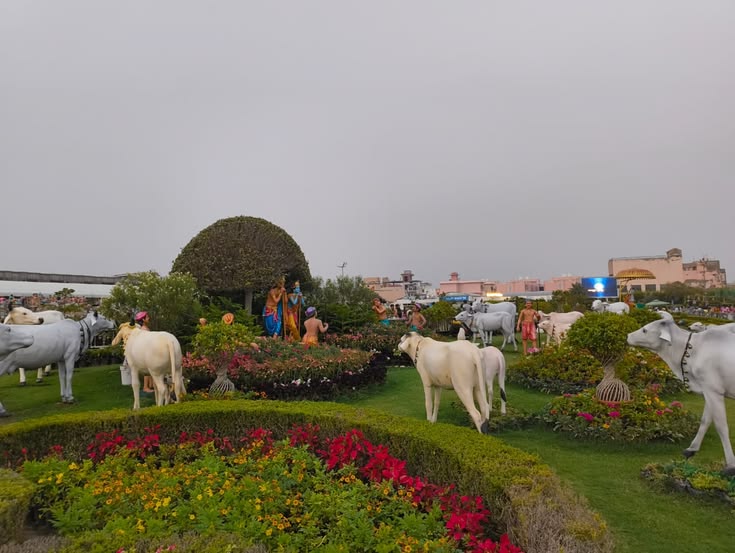
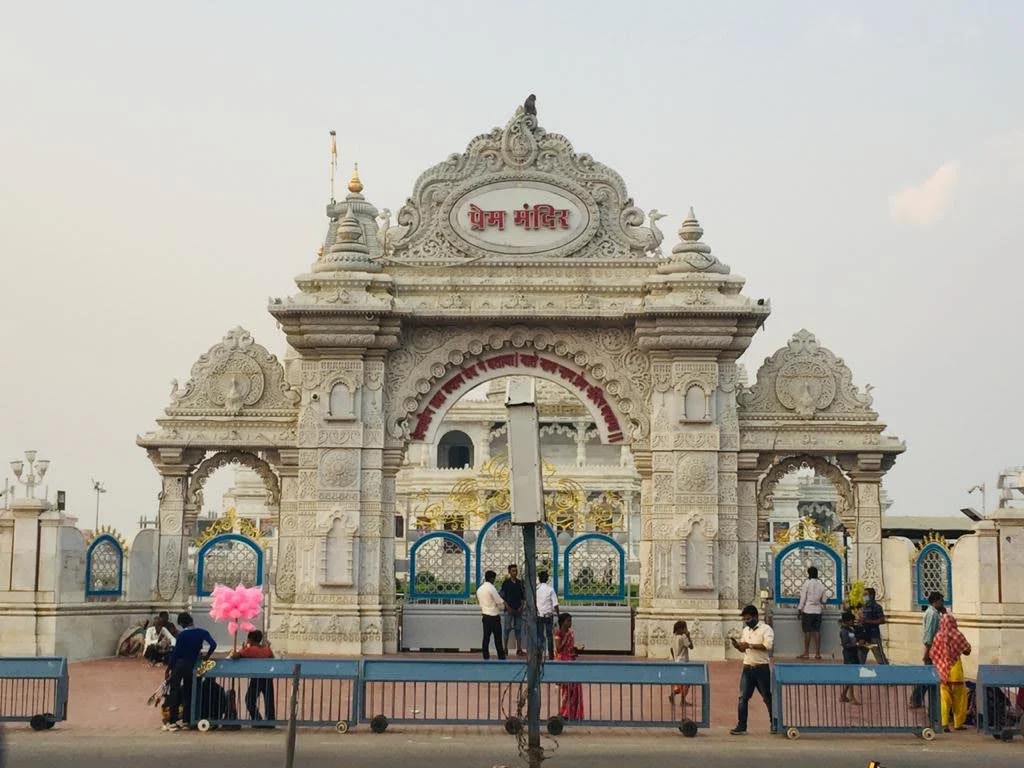
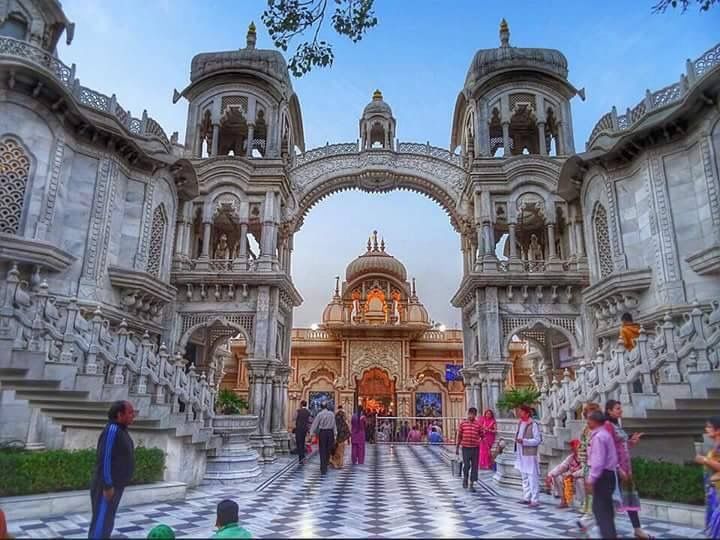
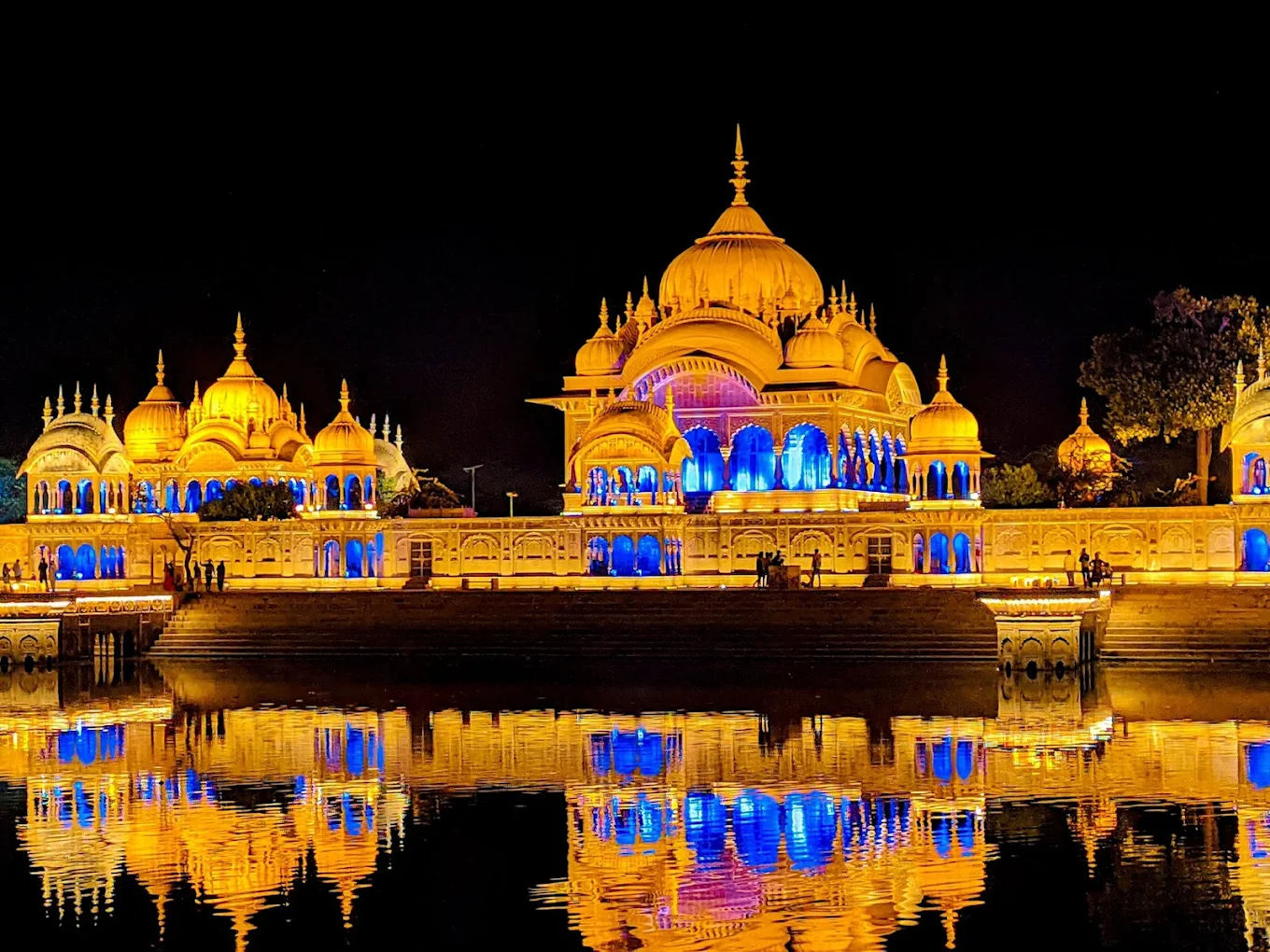
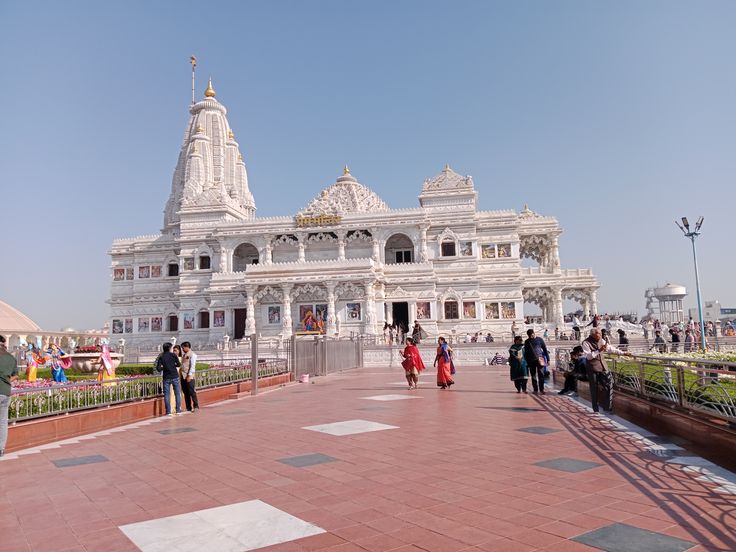
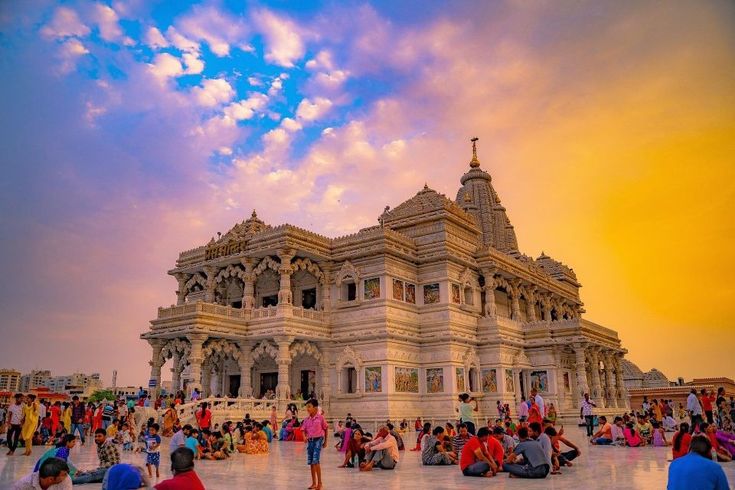
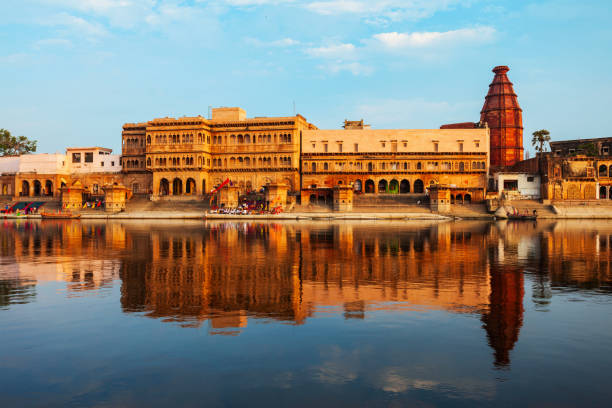
Mathura and Vrindavan sit 15 kilometres apart on the Yamuna River in the Braj region, the landscape where Lord Krishna is believed to have been born, raised, and spent his early life. Mathura is the older and more urban of the two: the Krishna Janmabhoomi temple complex marks the exact spot of Krishna's birth within a prison cell, adjacent to the Shahi Eidgah mosque in one of India's most complex pieces of religious coexistence. Vrindavan, 15 kilometres upriver, is a town of 5,000 temples concentrated in a small area on the Yamuna's bank, the Banke Bihari Temple, the ISKCON Temple, the Prem Mandir (an all-white marble temple completed in 2012 that is illuminated spectacularly at night), and dozens of ancient temples that draw pilgrims from across the world. The Braj Parikrama- a 84-kilometre circuit of the sacred sites associated with Krishna's life is one of Hinduism's most significant pilgrimage walks.
Best Time to Visit- October to March (pleasant weather) • Holi season (February to March) Braj Holi including Lathmar Holi in Barsana is the finest Holi celebration in India, book 4 months ahead • Janmashtami (August), Krishna's birthday, extraordinary all-night celebrations at Mathura and Vrindavan.
Places to Visit- Banke Bihari Temple • Krishna Janmabhoomi • Prem Mandir • ISKCON Temple (Chandrodaya Mandir) • Keshi Ghat • Govardhan Hill • Barsana • Nandgaon • Radha Kund.
What to Eat- Peda (Mathura's famous milk-based sweet buy from the original shops around the Krishna Janmabhoomi) • Khurchan (scraped milk sweet, a Mathura speciality) • Rabri with Jalebi • Chaat at Vrindavan's temple street stalls • Prasad meals at ISKCON (the community kitchen serves extraordinary vegetarian food) • Lassi.
5. Prayagraj (Allahabad)- Sangam and the Kumbh Mela
Prayagraj holds the Triveni Sangam the confluence of the Ganges, Yamuna, and the mythical underground Saraswati River which Hinduism considers the most sacred point on earth, the Tirtharaj or King of all pilgrimage sites. The Kumbh Mela held here every 12 years (the Maha Kumbh) and every 6 years (the Ardh Kumbh) is the largest human gathering on the planet, the 2025 Maha Kumbh drew an estimated 660 million visitors over 45 days. Outside Kumbh years, the Sangam is a place of quiet, deep spiritual significance where pilgrims come year-round to bathe at the confluence and to perform last rites. The Allahabad Fort (built by Akbar in 1583) contains the Ashoka Pillar inscribed in 232 BCE one of the most significant historical artefacts in India and the underground Patalpuri temple. The Anand Bhavan and Swaraj Bhavan, the Nehru-Gandhi family homes give Prayagraj an important place in the Indian independence movement's history.
Best Time to Visit- October to March (best weather) • Maha Kumbh (every 12 years, next: 2037) • Ardh Kumbh (every 6 years, next: 2031) • Magh Mela (annual January–February, smaller but significant gathering at the Sangam) • Makar Sankranti (January 14),the most sacred bathing day of the year at the Sangam.
Places to Visit- Triveni Sangam • Allahabad Fort • Ashoka Pillar • Anand Bhavan • Swaraj Bhavan • Khusro Bagh • Hanuman Temple (underground) • Bharadwaj Ashram • Alfred Park (Chandrashekhar Azad Park)
What to Eat- Tehri (spiced rice with vegetables, a UP speciality distinct from biryani) • Aloo Kachori • Chaat at Civil Lines (Prayagraj's Chaat is considered among UP's finest) • Shahi Tukda • Imarti • Chhena-based sweets • Lassi • Malaiyyo in winter.
6. Ayodhya- Ram's Sacred City
Ayodhya is one of the seven sacred cities of Hinduism and the birthplace of Lord Ram a site of pilgrimage for hundreds of millions of Hindus across the world. The Ram Janmabhoomi Temple, consecrated in January 2024, is the most significant new religious structure built in India in the modern era, a sandstone temple in the Nagara architectural style covering 70 acres on the banks of the Sarayu River, with a 161-foot high spire and interiors of carved Rajasthani pink sandstone. The temple has transformed Ayodhya from a relatively quiet pilgrimage town into one of India's fastest-growing tourism destinations, with the state government investing in riverside ghats, a new airport, and heritage corridors. The Sarayu River's 14 ghats, the ancient Kanak Bhawan temple (believed to be a royal gift from Kaikeyi to Sita), and the Hanuman Garhi temple (a fortified monastery atop a hill) round out a sacred landscape of extraordinary power.
Best Time to Visit- October to March (best weather for the ghats and open-air temples) • Ram Navami (March/April) Lord Ram's birthday, the most significant festival in Ayodhya, extraordinary celebrations at the Ram Janmabhoomi • Diwali (October/November)-Ayodhya's Deepotsav sees the entire city lit with lakhs of lamps on the ghats.
Places to Visit- Ram Janmabhoomi Temple • Hanuman Garhi • Kanak Bhawan • Ram ki Paidi Ghats • Nageshwarnath Temple • Treta Ke Thakur • Sarayu River • Dashrath Mahal • Mani Parvat
What to Eat- Ayodhya's satvik food- no onion or garlic near the temples • Prasad at Ram Janmabhoomi (sweet rice and dry fruits) • Puri Sabzi and Kheer at temple-area restaurants • Pedas and Laddoos from the sweet shops on Ram Path • Chaat at the ghat-side stalls • Chai with Mathri.
7. Sarnath- Where the Buddha First Taught
Sarnath sits 10 kilometres north of Varanasi and holds a significance in Buddhist history second only to Bodh Gaya: it is here, in the Deer Park, that the Buddha gave his first sermon after attaining enlightenment, an event known as the Dhammacakkappavattana Sutta or the "Turning of the Wheel of Dharma." The Dhamek Stupa, built in 500 CE on the exact spot of the first sermon, rises 43 metres from the flat Sarnath plain in a cylinder of stone decorated with the finest Gupta-period geometric carving. The Archaeological Museum at Sarnath contains the Lion Capital of Ashoka, the four lions standing back-to-back on an abacus, which became independent India's national emblem in 1950 and which, in the museum, can be seen at eye level in extraordinary detail. The Mulagandhakuti Vihara, built in 1931 by the Mahabodhi Society, has walls painted with scenes from the Buddha's life by the Japanese artist Kosetsu Nosu.
Best Time to Visit- October to March (best weather for open-air ruins) • November (Buddha Purnima celebrations at Sarnath, if timing aligns with Kartik Purnima) • Buddha Purnima (May) — the most important Buddhist festival, extraordinary gathering of monks from across Asia.
Places to Visit- Dhamek Stupa • Sarnath Archaeological Museum • Mulagandhakuti Vihara • Deer Park • Chaukhandi Stupa • Ashoka Pillar (base) • Thai Wat Temple • Tibetan Temple
What to Eat- Sarnath has simple vegetarian restaurants near the site, eat the main meal in Varanasi • Tibetan Thukpa and Momos at the Tibetan restaurant near the temple • South Indian meals at the Mahabodhi Society guest house dining room • Chai and light snacks at the site entry
8. Dudhwa National Park- The Terai Tiger Reserve
Dudhwa National Park, in the Lakhimpur Kheri district of the UP terai, is one of India's most biodiverse and least-visited tiger reserves, a 490-square-kilometre expanse of tall grassland, sal forest, and wetland along the Nepal border that is home to Bengal tiger, one-horned rhinoceros (reintroduced in 1984), barasingha (swamp deer, an endangered species found in very few places), and over 400 bird species. It is the finest wildlife destination in Uttar Pradesh and one of the best in north India yet it sees a fraction of Corbett's or Ranthambore's visitor numbers, which means the safari experience here is genuinely uncrowded and the wildlife sightings feel unscripted. The barasingha, the hard-ground swamp deer whose population was reduced to 2,000 in the 1970s and has since recovered in Dudhwa's grasslands is found nowhere else in the world in such numbers.
Best Time to Visit- November to June (park open) • February to May (best wildlife sightings- grasslands dry and animals concentrate near water) • Rhino sighting: year-round in the rhino enclosure area • Park closed July to October (monsoon).
Places to Visit- Dudhwa National Park • Kishanpur Zone • Rhino Enclosure Zone • Bankatti Buffer Zone • Katerniaghat Wildlife Sanctuary • Tharu Village.
What to Eat- Forest Rest House canteen (simple UP-style dal, rice, roti — eating inside the park is the experience) • Tharu community meal (arranged with village hosts, local rice preparations, forest greens, wild honey) • Lakhimpur Kheri town restaurants for UP Thali.
9. Chitrakoot- Where Ram Spent His Exile
Chitrakoot sits where Uttar Pradesh meets Madhya Pradesh in the Vindhya hills, 130 kilometres from Prayagraj, and holds a place in the Ramayana second only to Ayodhya in spiritual significance: it is here that Lord Ram, Sita, and Lakshman spent 11 of their 14 years in exile, and virtually every rock, hill, and river bend in the area has an associated narrative from that period. The Kamadgiri Hill- a 5-kilometre sacred hill believed to be the corporeal form of Lord Ram is circumambulated by thousands of pilgrims daily on a paved path lined with 36 temples. The Mandakini River flows through the town past sandstone ghats that have a quality of stillness and age rare even in UP's ancient pilgrimage towns. Chitrakoot is also the base for Sati Anusuya Ashram, the Gupt Godavari caves (two natural caves through which a stream flows, associated with the Ramayana), and the Hanuman Dhara waterfall at 360 feet.
Best Time to Visit- October to March (best weather for the ghats and hill treks) • Ram Navami (March/April) — extraordinary atmosphere • Diwali (October/November) — the ghats are lit beautifully • Monsoon (June–September), the Mandakini River floods but the hills are lush
Places to Visit- Kamadgiri Hill • Mandakini River Ghats • Gupt Godavari Caves • Sati Anusuya Ashram • Hanuman Dhara • Sphatik Shila • Ram Ghat • Janaki Kund
What to Eat- Simple satvik food at ashram and ghat-side restaurants — Puri Sabzi, Dal Chawal, Khichdi • Prasad from the Kamadgiri temples • Kachori and Jalebi at the Chitrakoot market • Local seasonal produce from the Vindhya hills
10. Kushinagar- Where the Buddha Attained Parinirvana
Kushinagar, in the Gorakhpur district of eastern UP, is the fourth and final of Buddhism's four most sacred sites, the place where the Buddha passed into Parinirvana (final extinction, beyond death and rebirth) in 483 BCE, at the age of 80, beneath twin sal trees in the Sala Grove. The Mahaparinirvana Temple contains the most important Buddha image in India: a 6.1-metre reclining figure carved from a single block of red sandstone in the 5th century CE, which was covered under rubble for over a thousand years before its rediscovery in 1876. The Ramabhar Stupa, 1.5 kilometres from the main temple, marks the exact cremation site, a grass-covered mound of brick that vibrates with a silence appropriate to its significance. Like Sarnath, Kushinagar has been surrounded by Buddhist temples built by every major Buddhist nation- Myanmar, Japan, China, Thailand, South Korea, Sri Lanka making it a remarkable architectural survey of world Buddhism.
Best Time to Visit- October to March (best weather) • Buddha Purnima (May), the most important Buddhist festival, monks from across Asia gather here • November — quieter than peak season but the air is clear
Places to Visit- Mahaparinirvana Temple • Ramabhar Stupa • Myanmar Monastery • Chinese Temple • Japanese Temple • Mathakuar Temple • Wat Thai Temple • Indo-Japanese Nirvana Stupa
What to Eat- Monastery langar food (simple vegetarian meals served at several of the international monasteries to all visitors) • Gorakhpur's Thandai • Local UP Thali at the guesthouses near the temple • Khichdi • Seasonal fruits and simple satvik food
Food Experience in Uttar Pradesh
Uttar Pradesh is a paradise for food lovers, offering a rich tapestry of Mughal, Nawabi, Awadhi, and Braj-style cuisines. Every region brings its own signature dishes, making your tour not just a visual delight but a true gastronomic adventure.
Signature Culinary Highlights:
- Lucknow (Awadhi Cuisine): World-famous Lucknowi Kebabs, Galouti Kebabs, Kakori Kebabs, Biryani, and Sheermal. Don’t miss the melt-in-mouth Tunde Ke Kebabs.
- Agra & Braj Region: Petha (sweet), Bedai with Jalebi, Mathura Peda, and delicious Braj-style Lassi.
- Varanasi: Famous for Banarasi Chaat, Tamatar Chaat, Kachori-Sabzi, and creamy Malaiyo (seasonal winter delicacy).
- Ayodhya & Prayagraj: Pure vegetarian thalis, sattvic meals, and traditional sweets like Rabri and Gulab Jamun.
Shopping Experience in Uttar Pradesh
Uttar Pradesh is a treasure trove for shoppers seeking authentic Indian crafts, textiles, and souvenirs. From royal Chikankari to marble inlay work, every city offers unique shopping delights.
Top Shopping Experiences by City:
- Lucknow: Famous Chikankari embroidery (kurta, sarees, suits), silverware, and Ittar (perfumes).
- Agra: Exquisite Marble Inlay (Pietra Dura) work inspired by the Taj Mahal, leather goods, and carpets.
- Varanasi (Banaras): World-renowned Banarasi Silk Sarees, brocade, and Zari work. Also famous for wooden toys and brassware.
- Mathura & Vrindavan: Traditional handmade jewelry, flute souvenirs, religious idols, and colorful handmade crafts.
- Ayodhya: Handcrafted Ramayana-themed souvenirs, wooden crafts, and pure saffron & dry fruits.
Best Time to Visit Uttar Pradesh
Uttar Pradesh is a year-round destination, but your experience varies significantly by season:
October to March (Peak Season- Highly Recommended)- This is the best time to visit UP. The weather is cool and pleasant, making sightseeing comfortable. The Taj Mahal is at its most majestic in winter morning mist. Most of UP's major festivals Diwali, Dev Deepawali, and the Magh Mela also fall in this window.
April to June (Summer)- Hot and dry, with temperatures often crossing 40°C. Varanasi and Mathura can be visited early morning and evening; midday sightseeing is best avoided. Budget travellers find great hotel deals in this period.
July to September (Monsoon)- The Gangetic plains receive good rainfall. Heritage sites are beautifully green, and crowds are thinner. Road conditions can occasionally be challenging in rural areas.
Festival Highlights:
- Holi in Mathura–Vrindavan (February–March) – The most vibrant Holi celebration on the planet.
- Dev Deepawali in Varanasi (November) – One million lamps lit on the ghats.
- Diwali in Ayodhya (October–November) – Guinness record for lamp lighting.
- Kumbh/Ardh Kumbh in Prayagraj (January–February, varies).
- Janmashtami in Mathura (August) – Krishna's birthday celebration.
How to Reach Uttar Pradesh?
By Air- UP is served by several airports. Lucknow (Chaudhary Charan Singh Airport) and Varanasi (Lal Bahadur Shastri Airport) have direct flights from Delhi, Mumbai, Bengaluru, and other major cities. Agra Airport also has limited commercial services. Prayagraj Airport connects to major metros.
By Train- Uttar Pradesh has one of India's most extensive rail networks. Trains from Delhi to Agra take as little as 1.5 hours (Gatimaan Express). Lucknow, Varanasi, and Prayagraj are connected by multiple daily trains from Mumbai, Delhi, Kolkata, and Chennai.
By Road-The Yamuna Expressway connects Delhi to Agra in under 3 hours. National highways link Lucknow, Varanasi, Ayodhya, and Mathura efficiently. Vayabletrip provides comfortable AC cab transfers between all major UP destinations.
Why Choose Our Uttar Pradesh Tour Packages?
1. Expertly Curated Itineraries: Designed by experienced travel specialists with deep local knowledge across Uttar Pradesh.
2. Comfort & Convenience: Well-planned transport, trusted hotels, and seamless multi-city travel.
3. Spiritual & Heritage Expertise: Temple visits, heritage walks, cultural experiences, and guided sightseeing.
4. Customizable Packages: Tailor-made tours based on your travel dates, interests, and budget.
5. Festival Special Departures: Holi, Dev Deepawali, Kumbh Mela, Ram Navami, and Buddhist festival tours.
6. 24×7 Travel Support: Dedicated on-trip assistance throughout your journey.
7. Trusted by Thousands of Travellers: Family holidays, pilgrimage tours, luxury journeys, and group departures across India.
Ready to Explore Uttar Pradesh with Vayable Trip?
From the timeless beauty of the Taj Mahal and the sacred ghats of Varanasi to the spiritual energy of Ayodhya and Mathura, Uttar Pradesh offers one of India’s richest travel experiences. Whether you seek heritage, spirituality, culture, wildlife, festivals, or food, every journey through the state reveals centuries of history and tradition woven into daily life.
With Vayable Trip, your Uttar Pradesh journey becomes more than just a holiday, it becomes a carefully planned cultural experience. From comfortable stays and smooth transport to personalised itineraries and expert local support, we ensure every part of your trip is seamless, enriching, and memorable.
Start your Uttar Pradesh journey with us, because unforgettable travel begins with the right travel partner.